


 The „Gaming for Democracy“ (G4D) initiative brings together stakeholders from education, academia, civil society, and the entire gaming ecosystem. Launched by the Foundation for Digital Game Culture and its partners, the initiative aims to build a growing alliance by 2029 that develops new approaches to promoting democracy, pools knowledge, and facilitates joint action.
We launch game-based formats to promote democracy, organize working groups to develop innovative educational initiatives, and pool knowledge through conferences and publications. „G4D“ takes gaming seriously as both a cultural phenomenon and a political arena and aims to create sustainable solutions to the challenges facing democracy.
The initiative has set the following goals by 2029:
(Source: game – Verband der Deutschen Games-Branche)
(Source: game – Verband der Deutschen Games-Branche)
(Source: Study „Spielräume für Demokratie“ of the Bertelsmann Stiftung)
Current project of the initiative:
Community Support Network (German website)
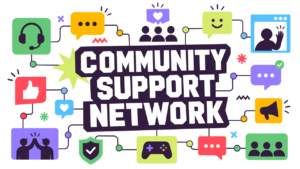 Gaming communities are important spaces where young people, in particular, find guidance and socialize. The project „Community Support Network – Management and Care Structures for Resilient Gaming Communities“ strengthens this potential by viewing community management as a democratic practice. It trains community managers and moderators, promotes peer-care structures, and provides practical materials as Open Educational Resources (OER).
Background
Democracies around the world are under pressure. Authoritarian and populist forces are deliberately exploiting global crises to spread disinformation, undermine trust in democratic institutions, and deepen social divisions – with particular success among young people, who are increasingly turning to the political fringes in elections.
According to data from game – the Association of the German Games Industry – around 60 percent of people in Germany aged 6 to 69 play games. Of these, more than a quarter are between the ages of 10 and 29. These young gamers navigate a gaming-oriented digital space that shapes their political socialization and provides venues for socio-political debates. As the Bertelsmann Stiftung study „Spielräume für Demokratie“ shows, gaming enthusiasts in particular are already regularly engaged in politics.
While extremist groups attempt to exploit gaming communities for their own purposes, the democratic potential of young people’s digital lives is still not taken seriously enough – an effective, cross-sector, and pro-democratic approach to this target group has been almost entirely absent so far.
This is precisely where the initiative comes in: gaming communities are socially relevant spaces where democratic values can be lived out, negotiated, and strengthened.
 Our Vision:
The initiative advocates for a society in which people experience, understand, and actively embrace the principles and values of the liberal democratic order through the unifying power of gaming. Gaming is recognized as an interactive digital space for democratic engagement, critical thinking, and social cohesion within a pluralistic society.
The initiative sees itself as:
- Hub and incubator: It builds connections, initiates concrete measures to promote democracy, and actively advocates for the free democratic basic order
- Enabler of engagement: It supports existing stakeholders, initiates new educational and outreach formats, and pools resources
- Partner to gaming culture: Gaming is taken seriously as a distinct culture